Keeping track of research becomes difficult long before we start writing. We save papers across folders, collect references in separate documents, and highlight passages that we later struggle to find. In this Zotero review, I look at how the tool can help us keep sources, reading notes, and citations connected throughout a research project.
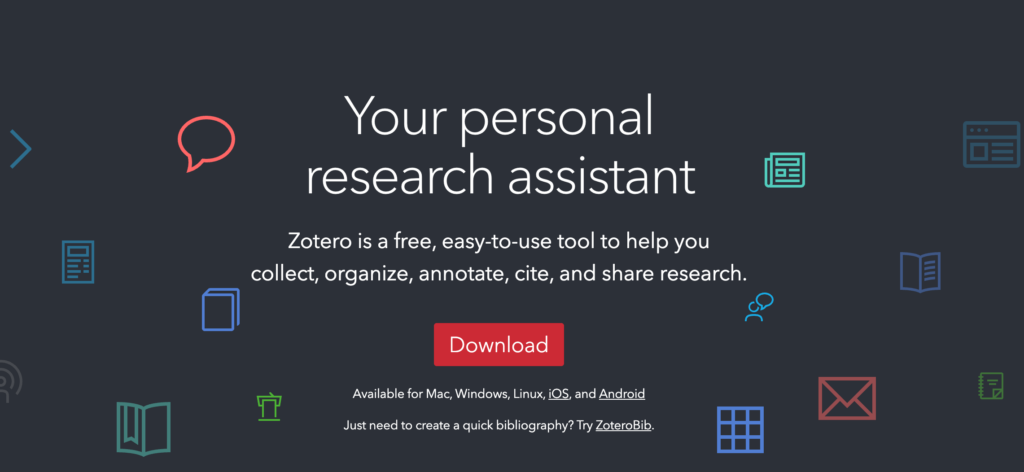
Zotero is a free, open-source reference manager developed by a nonprofit organization. It helps researchers collect, organize, annotate, cite, and share research. Its desktop application is available for Windows, macOS, and Linux, with mobile apps for iOS and Android. Zotero’s official overview Your personal research assistant describes these connected functions; their practical value is having a research library we can continue using across projects.
What Is Zotero?
Zotero stores bibliographic records: the information identifying a source, such as its authors, title, publication date, journal, and DOI. These records can hold attached PDFs, notes, and other materials.
A journal article, for example, can have its publication details, full text, highlighted passages, and your comments together in one place. When you cite it in a manuscript, Zotero uses that record to generate the reference.
This makes Zotero useful for dissertations, literature reviews, collaborative projects, and course reading collections. It provides the organization around our research. We still need to search appropriate databases, read the sources, and judge the evidence.
Zotero Features That Matter for Research
Collect Sources While Browsing
The Zotero Connector is a browser extension for Chrome, Firefox, Edge, and Safari. It recognizes bibliographic information on supported webpages and saves it to your library.
On a publisher’s article page, it can save the reference and attach an accessible PDF when available. Some search-results pages also allow you to select several records together.
Zotero’s saving documentation Zotero Documentation recommends capturing sources from their publication pages when possible. Saving directly from a PDF can work, but retrieving its publication details is less dependable.
Add Papers by Identifier or Import Files
If you already have a DOI or ISBN, Zotero can use it to retrieve the corresponding record. You can also drag PDFs into the application, which attempts to identify them.
For larger searches, importing a database export is often more practical than saving records individually. Formats such as RIS and BibTeX let you bring references from other research tools into Zotero.
Check the imported information. Missing authors, incorrect dates, and incomplete publication details can carry through into the bibliography.
Organize Papers with Collections and Tags
Collections group sources by project, topic, or course. Subcollections provide another level of organization.
One paper can belong to several collections without creating duplicate records. Zotero’s collection model Zotero Documentation is useful when a study contributes to more than one project: an article on AI feedback might belong in both a writing-research collection and an assessment collection.
Tags allow more specific distinctions. You might use to read, qualitative, feedback literacy, or methods checked. Saved searches can automatically gather records matching selected criteria.
Read PDFs and Keep Notes Connected
Zotero’s built-in reader supports highlighting, underlining, and annotations. You can turn annotations into notes and combine material from several papers.
The PDF reader documentation explains how these notes retain citations and links back to the relevant PDF pages. This connection matters during writing: we can return to the original passage and check its context.
I would use highlights selectively and add a brief explanation of why a passage matters. A collection of quotations becomes more useful when it also contains our interpretation, questions, and methodological concerns.
Insert Citations While Writing
Zotero integrates with Microsoft Word, LibreOffice, and Google Docs. You can insert citations, add page numbers, generate a bibliography, and change the document’s citation style.
The word processor tools Zotero Documentation maintain the connection between citations and library records. This reduces repetitive formatting work when a manuscript changes or a journal requires another style.
However, citation formatting depends on accurate records. A correctly formatted reference can still contain the wrong author or publication year.
Share a Research Library
Group libraries let colleagues collect and organize sources together. They are separate from your personal library, with settings controlling visibility and editing.
For a collaborative review, members can contribute papers and notes to a shared collection. A supervisor can also use a group library to assemble readings with graduate students.
Zotero’s group documentation Zotero Documentation distinguishes private groups from public membership options. File sharing depends on the group type and settings; open public groups do not support shared attachments.
Find and Merge Duplicates
Repeated searches often bring the same paper into a library more than once. Zotero identifies possible duplicates and lets you merge them.
Review the matches before merging. Similar titles and incomplete metadata can create misleading suggestions.
Sync Across Devices
Optional syncing keeps references, notes, tags, and other library data available across devices. An account also provides access to your web library.
Attachment syncing is handled separately. Zotero’s sync documentation Zotero Documentation makes this distinction clear: free data syncing does not mean unlimited online storage for PDFs.
Five Ways Zotero Can Help Researchers
1. Maintain a usable literature-review library. Create a project collection and tag papers by topic, method, and reading status. Record why each source matters rather than saving it without context.
2. Preserve the path from evidence to interpretation. Keep important annotations beside notes explaining what the study found, how it reached that finding, and what its limitations mean for your question.
3. Make manuscript revisions easier. Insert linked citations as you write. When references are added or removed, refresh the bibliography instead of rebuilding it manually.
4. Coordinate reading with collaborators. Use a group library with agreed collection names and tags. Record formal screening decisions separately when the review method requires independent assessment and an exclusion log.
5. Build a library that lasts beyond one project. Keep useful sources organized for future articles, lectures, and research proposals. A checked record and thoughtful reading note can remain useful years later.
Is Zotero Free?
The application is free, and syncing bibliographic data and notes is free and unlimited. Optional online attachment storage has a separate allowance.
The official storage page lists the following individual plans, checked in September 2026:
| Attachment storage | Annual cost in USD |
|---|---|
| 300 MB | Free |
| 2 GB | $20 |
| 6 GB | $60 |
| Unlimited | $120 |
These limits apply to online file storage, not the number of bibliographic records in your library. Group attachment storage draws from the group owner’s allowance.
What to Keep in Mind
Zotero needs a little initial organization. Too many overlapping collections or inconsistent tags can make a library harder to navigate.
Imported metadata also needs checking. Review author names, titles, dates, source types, and DOIs before relying on the generated references.
Finally, keep a separate backup. Syncing carries changes between devices, including deletions; it should not be your entire backup strategy.
My Assessment
I would use Zotero as the main home for references, full texts, and reading notes. Discovery tools can help us find promising studies, while Zotero keeps those sources connected to our ongoing work.
Its strongest contribution is continuity: a paper we discover today can remain linked to the notes we make while reading and the citation we eventually use in a manuscript. That organization becomes increasingly useful as projects and reading collections grow.