In a recent post, I outlined 9 ways AI-literate students learn with AI, focusing on how students use AI to support thinking, reading, writing, feedback, and reflection. That post traced the practices themselves, step by step, and showed how thoughtful AI use remains anchored in student judgment and intellectual ownership.
This post builds on that work. Think of it as an extension and a zoomed-out view of the same ideas.
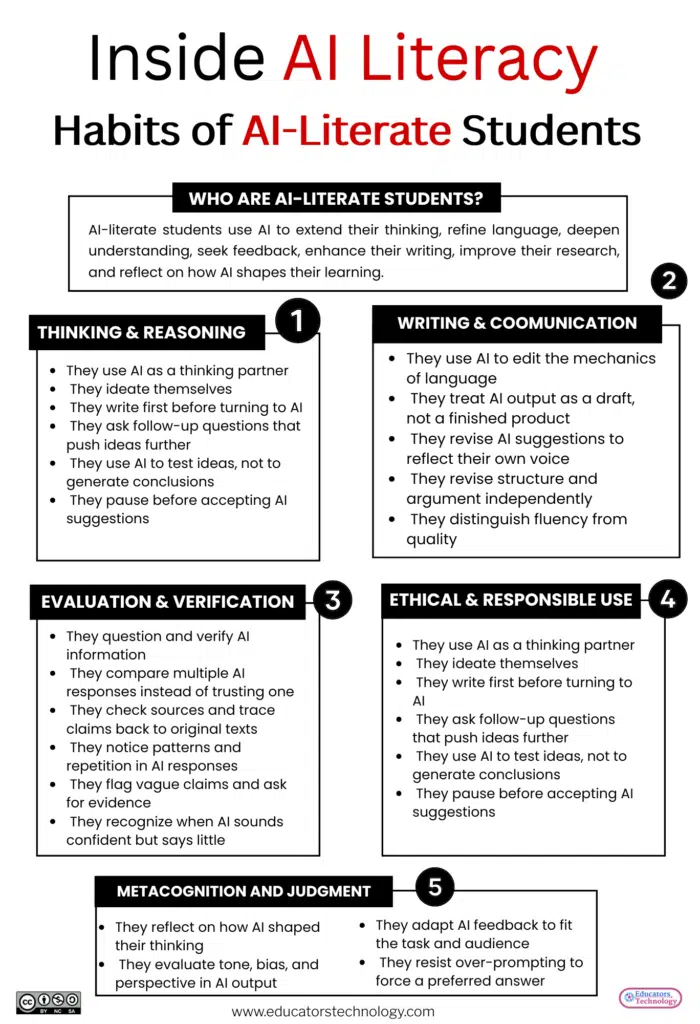
Instead of walking through each practice in detail, the visual above organizes those practices into five broader habit areas. Together, they offer a clearer picture of what AI literacy looks like in action, across learning tasks and disciplines.
For the full AI literacy guide, check out this link
From individual practices to enduring habits
AI literacy is not a checklist of tools or prompts. It shows up as a set of habits that shape how students approach learning tasks. These habits cut across assignments, courses, and technologies.
The visual groups the nine practices into five interconnected areas.
1. Thinking and reasoning
AI-literate students use AI as a thinking partner. They ideate themselves, write first, and ask follow-up questions that push ideas further. AI enters the process after thinking begins, helping students test ideas, surface gaps, and explore alternatives. What matters here is the sequence: thinking first, dialogue second.
2. Writing and communication
In writing, AI-literate students treat AI output as a draft. They use AI to edit the mechanics of language while keeping control over meaning, structure, and voice. Fluency does not equal quality, and students learn to revise AI suggestions with intention rather than accept them wholesale.
3. Evaluation and verification
AI-literate students develop strong habits of checking and comparison. They verify AI information, trace claims back to original sources, compare multiple responses, and pay attention to patterns and repetition. They notice when language sounds confident but lacks substance, and they ask for evidence.
4. Ethical and responsible use
Responsible AI use grows out of intellectual ownership. AI-literate students write first, ideate themselves, and use AI to test ideas rather than generate conclusions. These habits protect learning goals and support academic integrity without relying on surveillance or prohibition.
5. Metacognition and judgment
At the center of AI literacy sits reflection. AI-literate students pause to consider how AI shapes their thinking. They evaluate tone, bias, and perspective in AI output, adapt feedback to task and audience, and resist over-prompting to force preferred answers. Over time, this reflective stance strengthens judgment and self-regulation.
6. Why this framing matters
The earlier post on the 9 ways AI-literate students learn with AI focused on concrete practices teachers can model and students can adopt. This visual and post take the next step by showing how those practices cluster into broader habits of mind.
That shift matters. Habits travel with students across courses and contexts. They help students make better decisions about AI use long after specific tools change. If the first post answered the question “How do AI-literate students work with AI?”, this one answers a different question: “What kind of learners do they become?”