These 60 adjectives to describe clothes cover fit, texture, colour, pattern, and style. Use the definitions to choose precise vocabulary for describing an outfit, writing a character description, or practising everyday English.
Adjectives to Describe Clothes
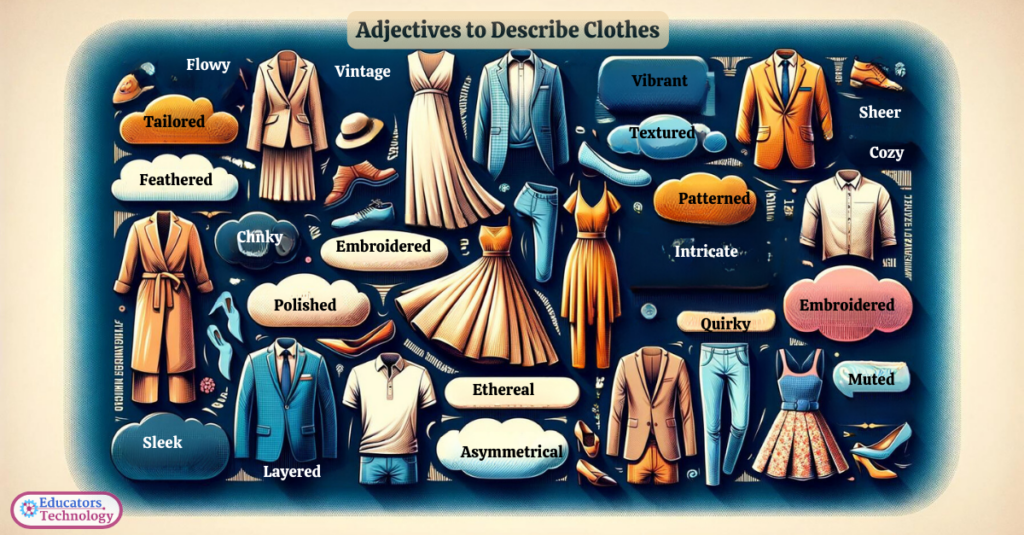
Here are adjectives that can help you articulate the appearance, texture, and style of garments in vibrant detail:
- Flowy – Hanging or draping loosely and gracefully.
- Tailored – Fitted and styled with precise adjustments.
- Vintage – Denoting something from the past of high quality, especially something representing the best of its kind.
- Vibrant – Bright and striking colors that make a bold statement.
- Textured – Having a distinct physical feel or surface pattern.
- Sleek – Smooth and glossy; having a chic and stylish appearance.
- Rustic – Having a simplicity and charm that is considered typical of the countryside.
- Patterned – Decorated with a repeated decorative design.
- Ethereal – Extremely delicate and light in a way that seems not of this world.
- Chunky – Thick, heavy, and solid, especially in reference to knitwear.
- Polished – Refined, sophisticated, and stylish in appearance.
- Quirky – Having an odd or unusual style or design.
- Muted – Softened, subdued hues that aren’t overly bright or loud.
- Billowy – Swelling out or puffing up, as in the shape of certain blouses or dresses.
- Fitted – Made to fit the shape of the body closely.
- Luminous – Reflecting light, glowing; often used to describe fabrics with a sheen.
- Embroidered – Decorated with patterns sewn onto the fabric with thread.
- Asymmetrical – Having parts that fail to correspond to one another in shape, size, or arrangement.
- Feathered – Having or decorated with feathers.
- Layered – Made of multiple layers of fabric or clothing worn on top of each other.
- Sheer – Thin and translucent; allowing light to pass through.
- Cozy – Giving a feeling of comfort, warmth, and relaxation.
- Intricate – Having complex patterns or details.
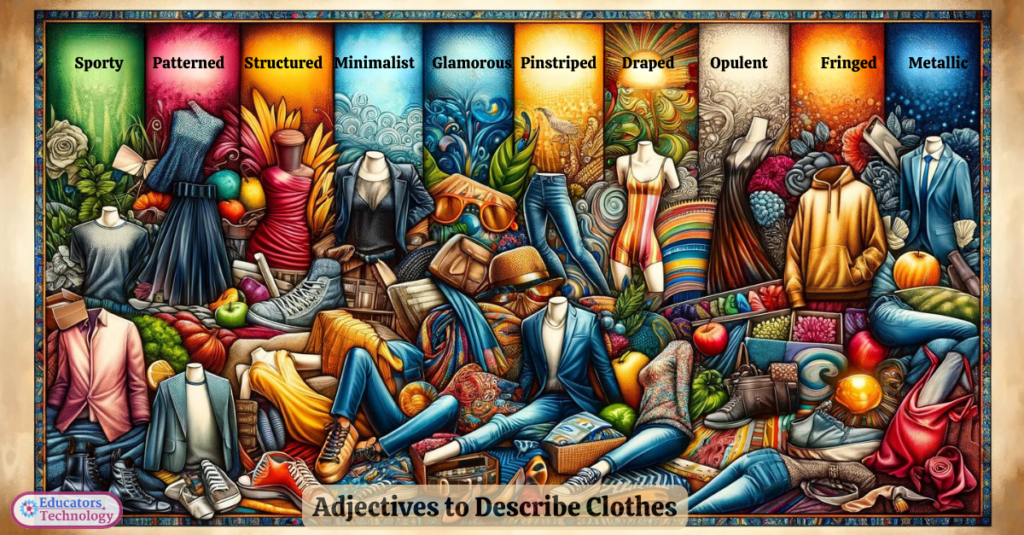
- Sporty – Suitable for sport or informal wear; active in appearance.
- Preppy – Associated with or characteristic of preparatory schools, often suggesting a conservative style.
- Bohemian – Having an unconventional style, often associated with artists or writers.
- Structured – Constructed with a clear shape and form, often creating a tailored look.
- Minimalist – Simple, clean lines with a monochromatic or limited color palette; lacking in excess detail.
- Glamorous – Appearing to be attractive and exciting, and suggesting a lifestyle of luxury.
- Distressed – Having a worn, faded, or rough appearance, often deliberately for stylistic purposes.
- Pinstriped – Having a pattern of very narrow stripes.
- Draped – Characterized by fabric hanging loosely in folds.
- Opulent – Luxuriously rich and superior in quality.
- Fringed – Having a decorative border or edge consisting of hanging threads, tassels, or strips.
- Metallic – Having a shiny, reflective quality, resembling metal.
- Snug – Fitting closely, often in a way that provides warmth and comfort.
- Oversized – Much larger than the normal size, often used to suggest a style rather than just a fit.
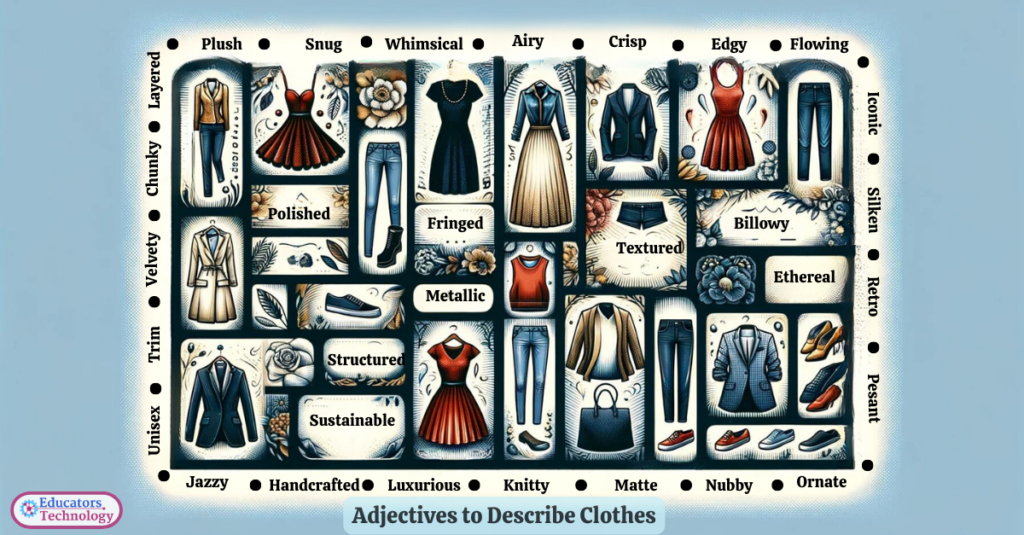
- Plush – Richly luxurious and expensive, often referring to soft and velvety fabrics.
- Sustainable – Designed with attention to environmental and resource impacts; specific sustainability claims need supporting information.
- Whimsical – Playfully quaint or fanciful, especially in an appealing and amusing way.
- Airy – Light and breezy, creating a sense of space and coolness.
- Crisp – Fresh and clean in appearance, often used to describe neatly pressed clothes.
- Edgy – Trendy in a bold or unconventional way, often associated with a sharp or cutting-edge style.
- Flowing – Hanging or draping in loose and graceful folds.
- Handcrafted – Made by hand or using traditional methods, adding a sense of uniqueness and quality.
- Iconic – Recognized widely and representing a certain style or era with enduring appeal.
- Jazzy – Bright, colorful, and lively; evoking a sense of fun and vibrancy.
- Knitted – Made by interlocking loops of wool or yarn, offering warmth and comfort.
- Luxurious – Extremely comfortable, elegant, or enjoyable, especially in a way that involves great expense.
- Matte – Having a surface that is dull and not shiny, offering a subtle and sophisticated look.
- Nubby – Having a rough surface texture, typically due to the presence of small raised lumps or particles.
- Ornate – Elaborately or highly decorated with intricate patterns or details.
- Peasant – Styled after traditional rural or folk clothing, often with a relaxed fit and decorative embroidery.
- Retro – Imitative of a style or fashion from the recent past.
- Silken – Smooth, soft, and glossy, resembling silk.
- Trim – Neat and smart in appearance; also refers to decoration or embellishment on clothing.
- Unisex – Designed to be suitable for both sexes; not gender-specific.
- Velvety – Soft and smooth, resembling velvet in texture.
- Weathered – Showing signs of exposure to the weather, which can add a rugged or vintage appeal.
- Yarn-dyed – Dyed before being woven into fabric, giving the material rich, long-lasting color.
Also check out:
- Adjectives to Describe a Person Physically
- 50 Adjectives to Describe a House
- Words and Adjectives to Describe a Person
- 80 Adjectives to Describe Feelings
- 20 Engaging Activities to Teach Kids About Adjectives
Example sentences for describing clothes
- She wore a striped shirt with a tailored jacket.
- The chunky scarf felt warm and soft.
- His oversized coat had two deep pockets.
- The dress had an embroidered collar and a flowing skirt.
For a speaking activity, show a clothing illustration and ask students to describe two visible features. Focus on garments and design, rather than judging someone’s body or the cost of their clothes.
Continue with our teacher resources and these movie adjectives for another descriptive-writing task.
References
Davies, C., Lingwood, J., & Arunachalam, S. (2020). Adjective forms and functions in British English child-directed speech. Journal of Child Language, 47(1), 159–185. doi:10.1017/S0305000919000242