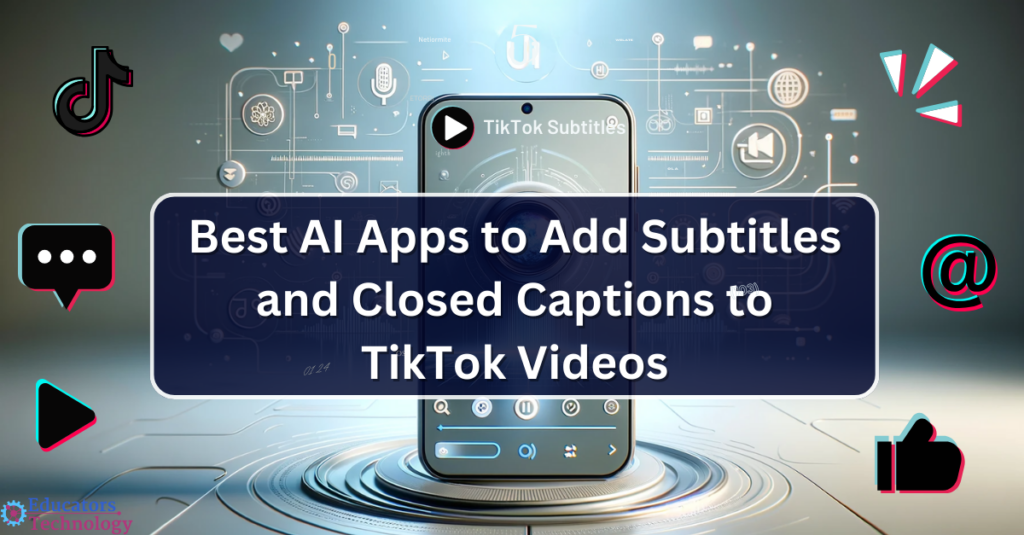
Automatic captions can provide a useful first draft for a short teaching video, including one you plan to share on TikTok. The essential step comes afterward: correct the transcript and check its timing before publishing.
Captions that are burned into the picture remain visible; closed captions can be switched on or off by the viewer. Check which format your destination supports. A visually attractive caption style does not by itself make the transcript accurate or easy to read.
Two captioning tools to compare
Canva: captions within a video design
Canva’s automatic caption generator can generate captions for a video. If you already prepare video materials in Canva, check its current caption controls before adding a separate app to your workflow.
Try a short sample containing the names and subject vocabulary used in your lesson. Review the generated wording, make corrections, and preview the finished design at the size viewers will actually see.
VEED: a dedicated subtitle workflow
VEED’s subtitle generator provides an online route to generating and editing subtitles. Before choosing a plan, check the export format, watermark, language support, and any download or translation limits you need. Availability can differ between plans.
This is worth comparing when captions are a central part of your editing process. Test a short clip and inspect the exported result before committing a longer video.
A caption-checking workflow for teaching videos
- Start with clear audio. Reduce background noise and leave enough space between key ideas.
- Generate a draft transcript. Use the caption tool available in your chosen editor.
- Check meaning first. Correct names, technical vocabulary, numbers, and missing negatives. A single omitted “not” can reverse an explanation.
- Check timing and readability. Watch for text that disappears too quickly, covers a diagram, or blends into the background.
- Preview the exported video. Make sure corrections survived export and that the captions are readable on a phone.
- Keep a corrected transcript. It can help viewers who prefer to read and makes later revisions easier.
A classroom example
For a short explanation of evaporation, prepare the narration first and identify vocabulary the caption tool might mishear. After generating captions, compare them against the script. Ask a colleague to view the clip without sound and note where the explanation becomes unclear. Use that feedback to revise wording and timing.
Check school expectations before including students in a recording or uploading their information to an external service. Teacher-created demonstrations can often use diagrams or objects without showing students.
Related resources
- AI Apps: browse creative workflows and related guides.
- Educators’ guide to AI tools: select a tool around your teaching task.
- AI classroom activities guide: connect a resource with a learning activity.