The classroom collection · 05
Make room for building, testing, and discovery.
Hands-on resources for experiments, engineering challenges, coding, and exploration. Below are twelve product ideas, with practical uses and details to check before you choose.
As an Amazon Associate I earn from qualifying purchases. If you buy through an affiliate link on this page, I may earn a commission at no additional cost to you.
Explore the collection
Choose for your students, space, and budgetThe photos and buttons open the featured products on Amazon. Check the individual listing for specifications, age guidance, and what is included.

Learning Resources Botley 2.0 Coding Robot Activity Set
Use a coding robot to turn a planned sequence into movement. Ask students to predict the route, test their instructions, and explain what they would change.
Useful for: Introductory coding and sequencing
View on Amazon ↗
Learning Resources Let’s Go Code! Activity Set
Bring coding into a movement-based activity with students planning and following directions. Pair learners so one gives instructions while the other tests the sequence.
Useful for: Unplugged coding and partner work
View on Amazon ↗
ELEGOO UNO R3 Super Starter Kit
Introduce physical computing through a starter kit that connects code with electronic components. Check the tutorial, computer requirements, and supervision needs before planning a group project.
Useful for: Guided electronics and coding projects
View on Amazon ↗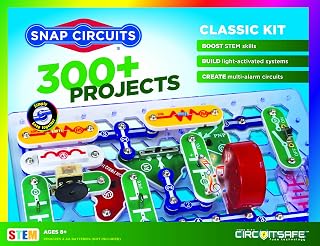
Snap Circuits Classic SC-300
Give students a way to assemble circuits and investigate how changing a connection affects the result. Invite them to sketch a circuit and explain their predictions before testing it.
Useful for: Electricity investigations and STEM stations
View on Amazon ↗
TOMLOV DM301 Pro Digital Microscope
Use the built-in screen to support close observation of classroom specimens. Check the included accessories and sample requirements, then have students record drawings and questions from their observations.
Useful for: Observation journals and science demonstrations
View on Amazon ↗
Learning Resources Primary Science Lab Set
Create a starting point for teacher-guided science investigations. Plan the experiment first, then check which tools and additional materials you will need for each group.
Useful for: Early science exploration
View on Amazon ↗
Learning Resources Super Magnet Lab Kit
Set up investigations in which students predict, sort, and test how materials respond to magnets. Have groups compare their results and identify patterns in the evidence.
Useful for: Magnetism investigations
View on Amazon ↗
Learning Resources STEM Force & Motion Activity Set
Build a lesson around predicting and observing motion. Ask students to change one part of a setup at a time and explain how that change affects their results.
Useful for: Forces, motion, and fair tests
View on Amazon ↗
Learning Resources STEM Explorers Bridge Builders
Give small groups a bridge-building challenge with a clear goal and constraints. Encourage students to document their first design, test it, and explain their revisions.
Useful for: Engineering design and collaborative problem solving
View on Amazon ↗
Jasonwell 110-Piece Magnetic Tiles Set
Offer an open-ended building station for exploring shapes and structures. Add a challenge such as building a stable tower or creating two different structures from the same pieces.
Useful for: Geometry and construction challenges
View on Amazon ↗
Learning Resources Tumble Trax Magnetic Marble Run
Invite students to design a marble route, test it, and adjust the arrangement. Check the magnetic surface requirements before choosing a place for the activity.
Useful for: Gravity, motion, and iterative design
View on Amazon ↗
ThinkFun Gravity Maze
Use a marble logic game as a small-group problem-solving station. Ask students to explain their planned route and what they learned when a test did not work.
Useful for: Spatial reasoning and logic challenges
View on Amazon ↗Before you choose
- Check age guidance, small parts, required supervision, and device compatibility.
- Count usable materials per group; one impressive kit may not serve a whole class.
- Favor opportunities to explain, test, and revise rather than simply follow a finished model.