Gemini Notebook, formerly known as NotebookLM, is one of my favourite AI research tools. I have been using it for the last couple of years, and one of the things I appreciate most is the contained environment it provides.
You bring your sources into a notebook and work directly with that collection. When Notebook answers a question, it points you back to the passages it used, which makes checking its response much easier.
This matters because one of the persistent problems with AI is hallucination. A fluent answer can include distorted claims, invented details, or connections that the original sources do not support. Working inside a defined collection does not make Gemini Notebook completely immune to these problems.
You still need to open the citations and check the original material. In my experience, though, this source-grounded environment gives you much more control than an open-ended conversation with an AI chatbot.
I have also used Gemini Notebook with my Bachelor of Education students. What surprised me was how quickly they moved beyond the uses I had shown them. They began finding their own ways to question sources, compare ideas, prepare learning materials, and work through difficult readings. Some of their ideas made me reconsider how broadly the tool could be used in teaching and research.
Google has also added a growing collection of features during the last few months. You can now move from a set of sources to audio and video overviews, mind maps, quizzes, flashcards, infographics, and slide decks. The tool has become much more than a place to upload documents and ask questions.
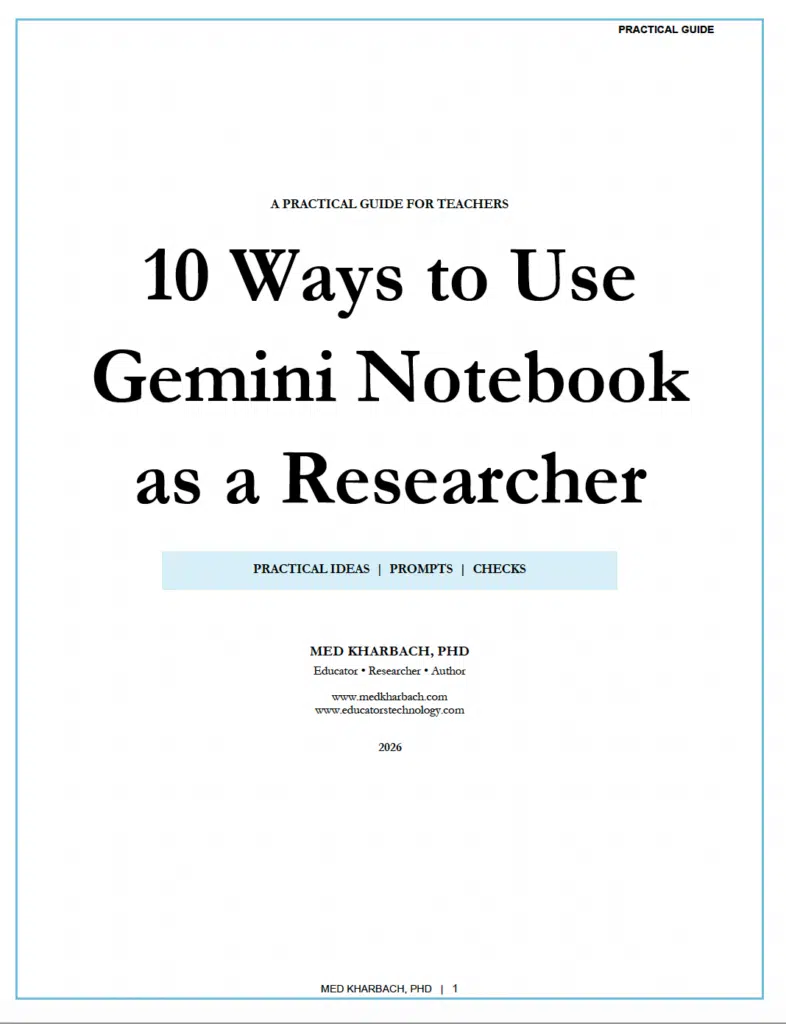
I created this guide to share ten practical ways you can use Gemini Notebook in your teaching and research. Each idea includes a short explanation, a simple process to follow, a prompt you can adapt, and a reminder about what you should check before using the output. My aim is to help you see what the tool can do while keeping your own reading, interpretation, and professional judgment at the centre of the work.