Most teachers I talk to aren’t resistant to AI. They’re overwhelmed by it. New tools launch every week, every conference session mentions it, and the advice ranges from “ban it completely” to “use it for everything.” Somewhere in the middle is where the real work happens, and that’s exactly what this guide is about.
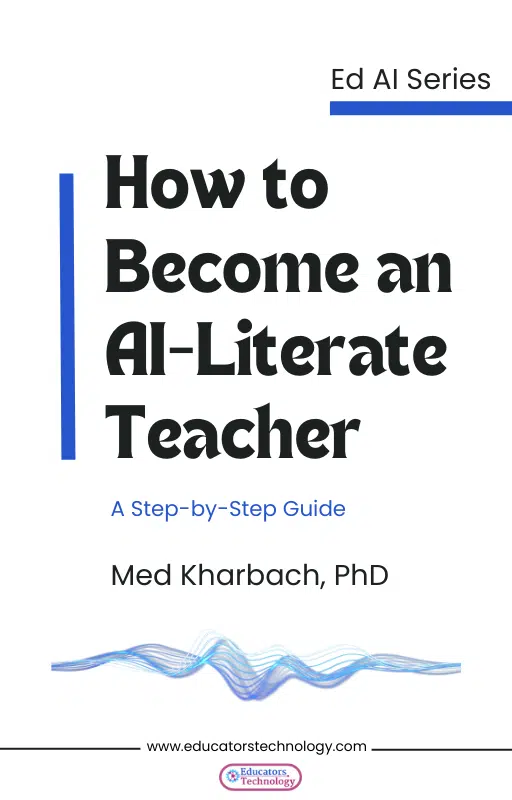
I wrote How to Become an AI-Literate Teacher a few months ago then revisted it lately to reflect current updates and insights. I kept hearing the same question from educators: where do I actually start? Not which chatbot is the best or which tool has the most features, but what does it look like to build real, lasting AI literacy as a teacher?
The frameworks are out there, from UNESCO to the OECD to Stanford’s Teaching Commons, but they’re scattered across different documents and written for different audiences. I wanted to pull the best of what’s available into one practical, step-by-step resource that any teacher could pick up and use right away.
The guide walks you through eight steps. It starts with foundational knowledge, the kind that helps you tell the difference between genuinely useful AI output and confident-sounding nonsense. You don’t need a computer science degree for this. You need to understand how large language models work at a basic level, why they hallucinate, and what that means for anything you or your students generate with them.
From there it moves into ethics, and I don’t mean ethics as an abstract concept. I’m talking about the four areas that directly affect your classroom: algorithmic bias, data privacy, academic integrity, and equity of access. If you’ve ever typed a student’s name into an AI tool or wondered what “fair use” looks like for a student assignment, those questions are addressed here.
One practical rule I picked up from Common Sense Education and included in the guide: information that doesn’t look like personally identifiable information can still create privacy problems when combined with other data points. A student’s pet name and birthday might seem harmless on their own, but together they start to identify someone.
The guide also covers how to get hands-on with AI tools without getting lost in the noise. The consistent advice from experienced educators is simple: pick three or four reliable platforms and learn them well. A general-purpose assistant like ChatGPT or Claude, a teacher-specific platform like Eduaide or MagicSchool, and one subject-specific tool that fits your discipline. That’s your starting kit. You don’t need twenty tools. You need three that you actually know how to use.
Prompting gets its own section because the quality of AI output depends almost entirely on how you frame your request. I’ve seen teachers go from frustrated to impressed in a single session just by learning to specify the audience, format, tone, and context in their prompts. The guide breaks this down with examples and practical advice that you can apply immediately.
Another important section I included covers the shift from personal productivity to classroom integration. A lot of teachers start using AI for their own planning and prep work, which is great, but the next step is thinking about how AI fits into actual instruction. The OECD framework calls this “Create with AI,” and it’s where things like having students critique AI-generated text, compare AI explanations to textbook explanations, or use AI drafts as revision exercises come into play. The guide includes concrete examples from teachers who’ve done this successfully across different subjects.
There’s also a full section on setting clear guidelines for student AI use, including a classroom AI agreement template. I prefer calling it an agreement, not a policy, because the process of creating it with your students matters just as much as the document itself. When students help shape the boundaries, they understand the reasoning and they’re far more likely to respect them.
The guide wraps up with ten tips for building your AI literacy gradually and a curated list of references from organizations like UNESCO, OECD, ISTE, Jisc, Stanford, and Common Sense Education. Every resource I cite is free and publicly available.
I’ve made this guide available as a free PDF. You can download it from the link below and use it at your own pace. It’s designed so you can start at whatever step makes sense for where you are right now. If you already know the basics and want to jump to classroom integration or student guidelines, go for it. If you’re genuinely starting from scratch, Step 1 is waiting for you.
AI literacy isn’t something you either have or you don’t. Every major framework published in the last two years treats it as a progression, and wherever you are right now is a valid starting point. This guide is my attempt to make that progression as clear and practical as possible. Grab the PDF, pick one step, and start there.