Checklists are powerful, we all know that! Think about those moments when you had to run back to the grocery store for that one thing you forgot, or that item you meant to pack for your trip but didn’t.
A checklist could’ve saved the day. And no, I am not only talking about remembering, I am talking about being intentional. Structure. Purpose. Clarity. In education, that mindset matters.
Every choice we make in our classrooms should come with intention: what we use, how we teach, and especially when it comes to integrating technology. Yes, there’s always room for experimentation, but it shouldn’t be random.
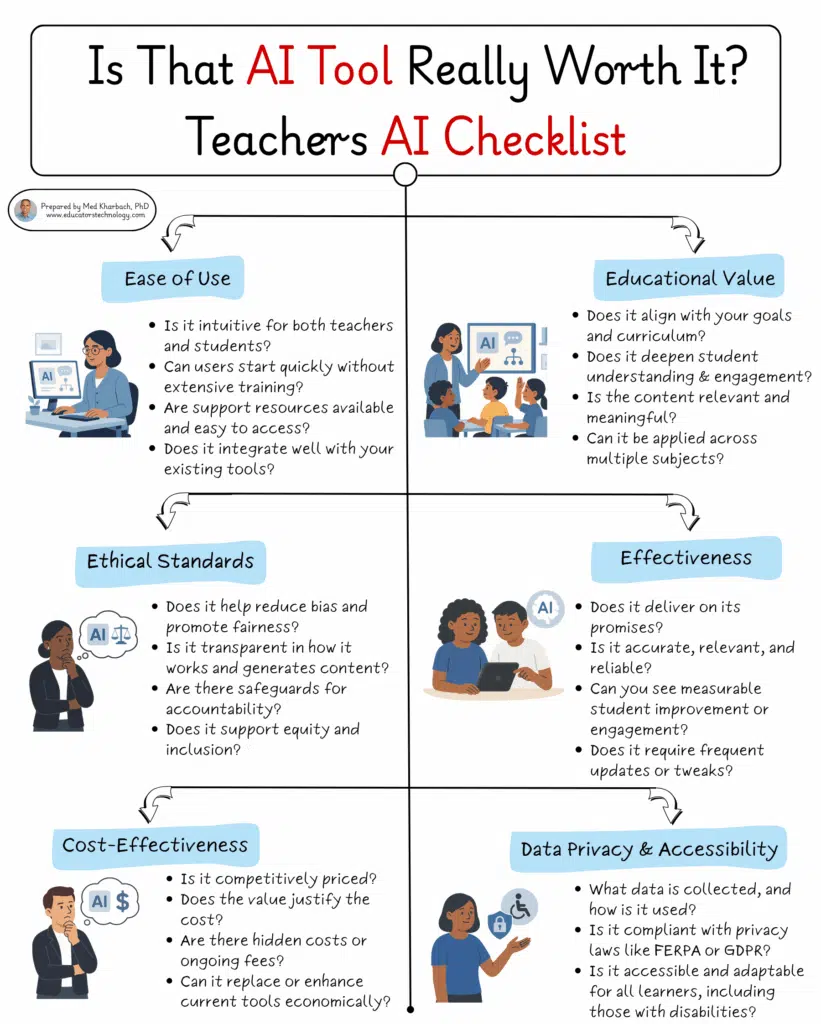
Awhile ago, I created a poster listing key questions to consider before using any educational technology based on insights from a Washington Post article titled ”What all parents can learn from the troubled AI in Los Angeles schools“.
Today, I’ve updated that list into a new visual focused specifically on AI tools in the classroom. This checklist is designed to help teachers, curriculum designers, and school leaders make thoughtful, informed decisions before adopting any AI tool.
Keep it nearby. Refer to it when you explore a new AI app or tool. Use it to anchor your choices. This isn’t about saying yes or no to AI. It’s about making sure your “yes” is the right one.
Questions to Assess AI Tools for Classroom Use
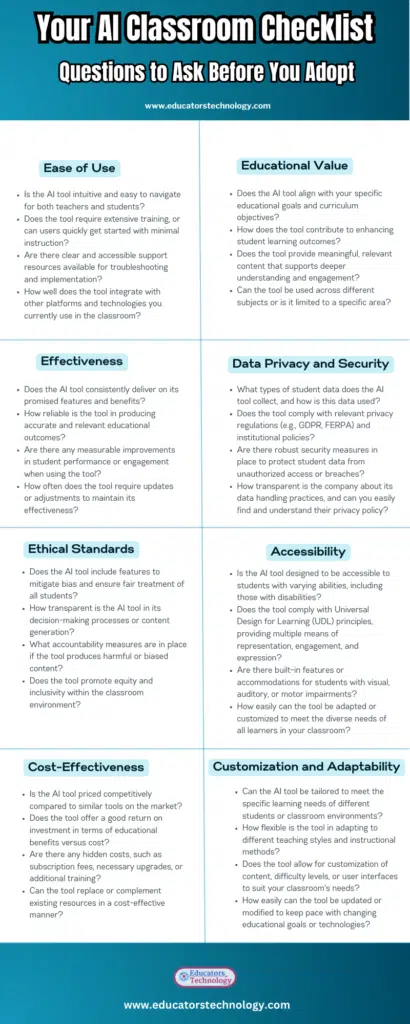
Here are eight criteria to keep in mind as you go about curating AI tools to use with your students in class. For each criterion, you will find five guiding questions designed to help you critically assess the tool’s effectiveness, usability, and alignment with your educational goals.
1. Ease of Use
- Is the AI tool intuitive and easy to navigate for both teachers and students?
- Does the tool require extensive training, or can users quickly get started with minimal instruction?
- Are there clear and accessible support resources available for troubleshooting and implementation?
- How well does the tool integrate with other platforms and technologies you currently use in the classroom?
2. Educational Value
- Does the AI tool align with your specific educational goals and curriculum objectives?
- How does the tool contribute to enhancing student learning outcomes?
- Does the tool provide meaningful, relevant content that supports deeper understanding and engagement?
- Can the tool be used across different subjects or is it limited to a specific area?
3. Effectiveness
- Does the AI tool consistently deliver on its promised features and benefits?
- How reliable is the tool in producing accurate and relevant educational outcomes?
- Are there any measurable improvements in student performance or engagement when using the tool?
- How often does the tool require updates or adjustments to maintain its effectiveness?
4. Data Privacy and Security
- What types of student data does the AI tool collect, and how is this data used?
- Does the tool comply with relevant privacy regulations (e.g., GDPR, FERPA) and institutional policies?
- Are there robust security measures in place to protect student data from unauthorized access or breaches?
- How transparent is the company about its data handling practices, and can you easily find and understand their privacy policy?
5. Ethical Standards
- Does the AI tool include features to mitigate bias and ensure fair treatment of all students?
- How transparent is the AI tool in its decision-making processes or content generation?
- What accountability measures are in place if the tool produces harmful or biased content?
- Does the tool promote equity and inclusivity within the classroom environment?
6. Accessibility
- Is the AI tool designed to be accessible to students with varying abilities, including those with disabilities?
- Does the tool comply with Universal Design for Learning (UDL) principles, providing multiple means of representation, engagement, and expression?
- Are there built-in features or accommodations for students with visual, auditory, or motor impairments?
- How easily can the tool be adapted or customized to meet the diverse needs of all learners in your classroom?
7. Cost-Effectiveness
- Is the AI tool priced competitively compared to similar tools on the market?
- Does the tool offer a good return on investment in terms of educational benefits versus cost?
- Are there any hidden costs, such as subscription fees, necessary upgrades, or additional training?
- Can the tool replace or complement existing resources in a cost-effective manner?
8. Customization and Adaptability
- Can the AI tool be tailored to meet the specific learning needs of different students or classroom environments?
- How flexible is the tool in adapting to different teaching styles and instructional methods?
- Does the tool allow for customization of content, difficulty levels, or user interfaces to suit your classroom’s needs?
- How easily can the tool be updated or modified to keep pace with changing educational goals or technologies?
Related: Important Tips on How to Identify AI-Generated Content in Student Assignments
Final thoughts
It is highly important for teachers and educators to view AI development with a critical eye, capitalizing on its benefits while wisely addressing its limitations. The criteria and questions I shared in this checklist are designed to help you navigate the complexities of AI adoption in the classroom, ensuring that the tools you choose enhance educational outcomes and uphold the highest standards of ethics, privacy, and accessibility.