Growth mindset posters for classroom is the topic of our blog post today!
Introducing growth mindset into the classroom has become an essential aspect of modern education. Recognizing that a student’s belief about intelligence and their ability to learn can have a profound impact on their academic performance has led educators, including myself, to seek ways to cultivate this mindset.
Growth mindset encourages students to embrace challenges, persist in the face of setbacks, and see effort as the path to mastery. Posters that reinforce these ideas can be a powerful visual tool in the classroom.
I have delved into this topic before, including exploring the psychology of growth mindset in various posts. Researchers such as Carol Dweck (see also Dweck and Yeager, 2012)have highlighted the importance of nurturing a growth mindset in students, as it contributes to motivation and increases resilience and achievement (Dweck, 2006). It’s not only about the words and messages we convey but also about the visual aids we use to reinforce them.
In this post, I’ll share a variety of growth mindset posters that can adorn your classroom walls and stimulate positive thinking among students. These posters (available on Amazon) play an important part in creating a learning environment that fosters creativity, perseverance, and personal growth. They come in various styles and themes, catering to different age groups and educational settings.
For those looking for more educational visuals and inspiring classroom posters, feel free to check out the classroom posters section. Here, you’ll find a carefully curated selection of visuals that can align with your teaching goals and philosophies.
Growth Mindset Posters for Classroom
Here are some interesting growth mindset posters for classroom to consider:
1. 22 Pieces Classroom Bulletin Board Decor Growth Mindset Posters
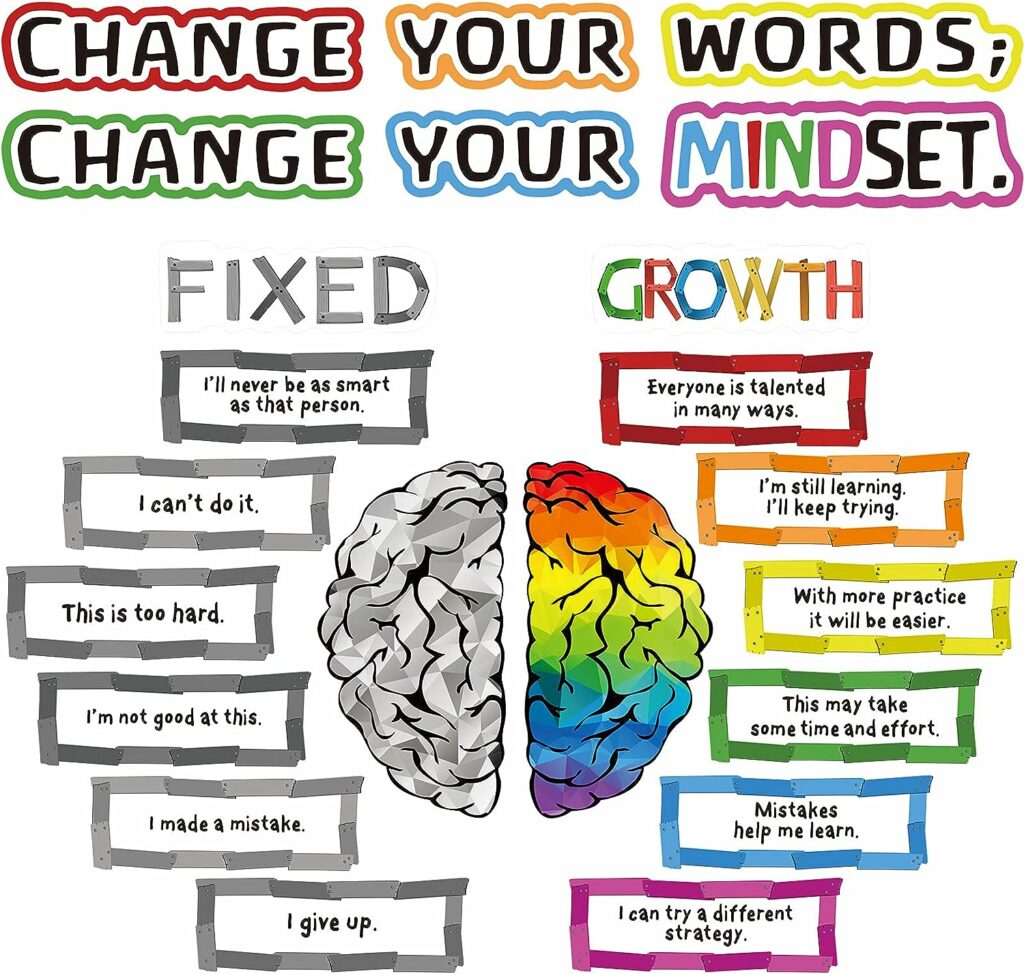
These 22 growth mindset posters, suitable for various settings such as classrooms, bedrooms, and playrooms, come with 60 glue points dots for easy application. They include messages showcasing 6 positive and 6 negative attitudes, aimed at encouraging children to understand and foster correct ideologies.
Printed using digital technology on hard card stock with surface lamination, these colorful and vibrant posters are designed to spark curiosity and promote a positive attitude. These reusable posters can be a delightful addition to any room, adding color and inspiring young minds.
2. Growth Mindset Posters for Classroom Decoration
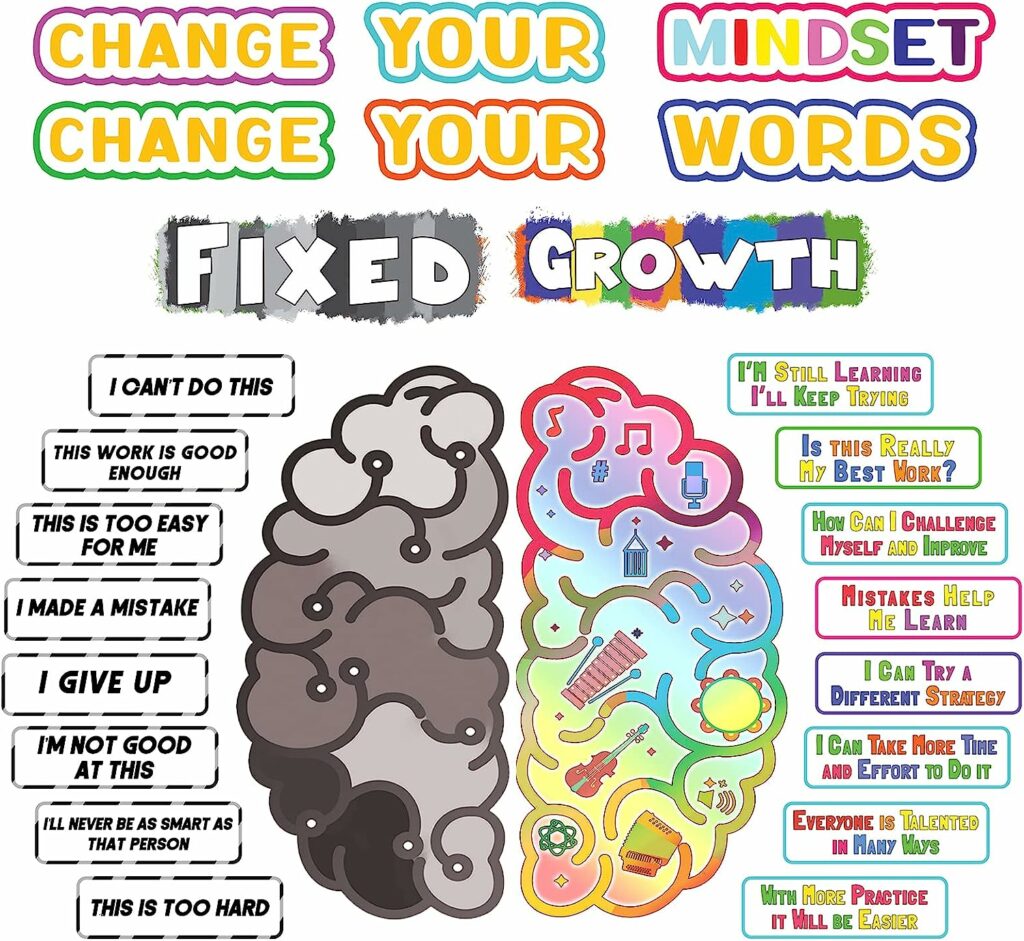
This package consists of 26 beautiful Growth Mindset Motivational Posters, offering a combination of positive sayings, fixed mindset thoughts, and brain imagery. Designed to be large and readable, these posters are made of hard card stock, making them waterproof and tear-resistant.
The bright color contrast and unique design are aimed to attract children’s attention and create an inspiring learning environment. These posters can be used in various places such as classrooms, bedrooms, and living rooms, promoting an optimistic attitude. The quality and service of these posters are also worth noting, adding value to back-to-school supplies.
3. HoneyKICK Growth Mindset Classroom Poster
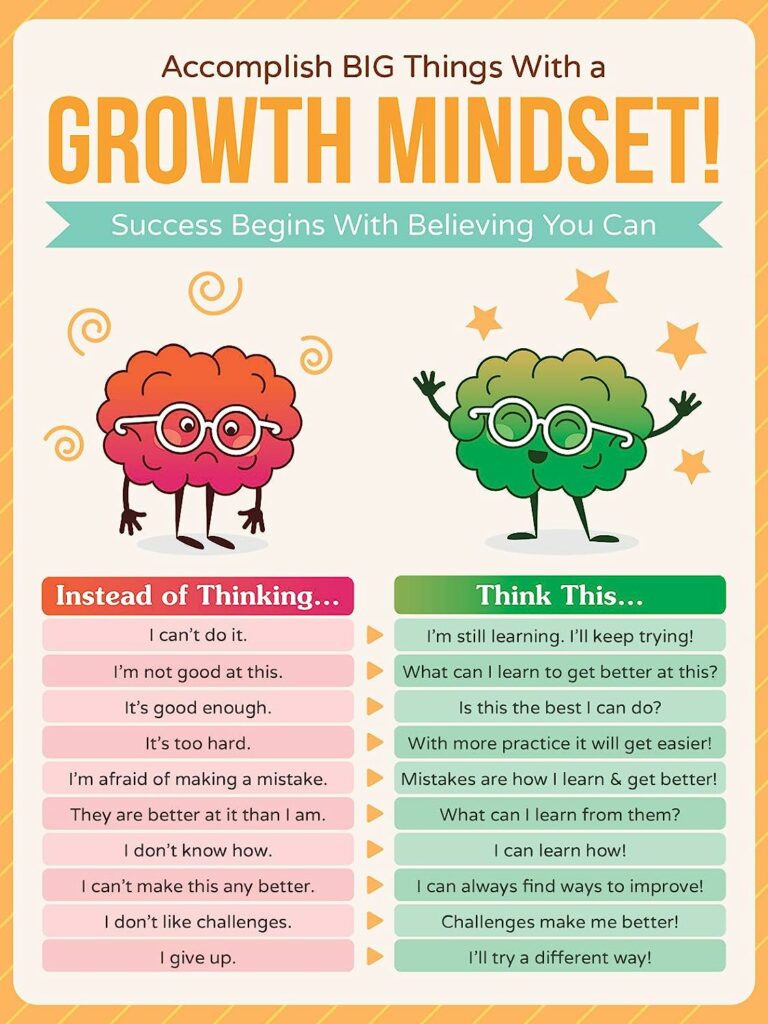
The HoneyKICK Growth Mindset Classroom Poster acts as an educational tool to motivate children to adopt a growth mindset, an essential element for success at school and home. The poster, sized 12 x 16, features 10 fixed mindset thoughts and equivalent growth mindsets, presented in bright and vibrant colors.
Printed on quality glossy paper, this wall art can be hung in classrooms, libraries, learning centers, or even a child’s bedroom. Shipped in a stay-flat envelope to prevent damage, it can be hung with or without a frame.
4. Sproutbrite Growth Mindset Classroom Decorations
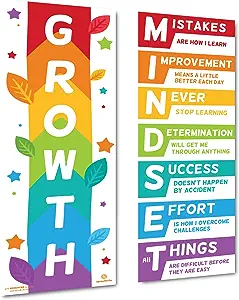
Sproutbrite offers a set of two colorful banners, each measuring 13.5″x39″. Printed on intentionally thinner paper, these banners boast colors, brightness, and contrast comparable to high-quality photo paper. Suitable for preschool to middle school, they’re perfect for not only classrooms but also daycares, libraries, and learning centers.
What sets Sproutbrite apart is their commitment to bold colors and customer satisfaction, backed by a 30-day money-back guarantee. These banners can truly enliven any educational space with their vibrant appearance.
5. Sproutbrite Classroom Decoration Banner Poster Pack
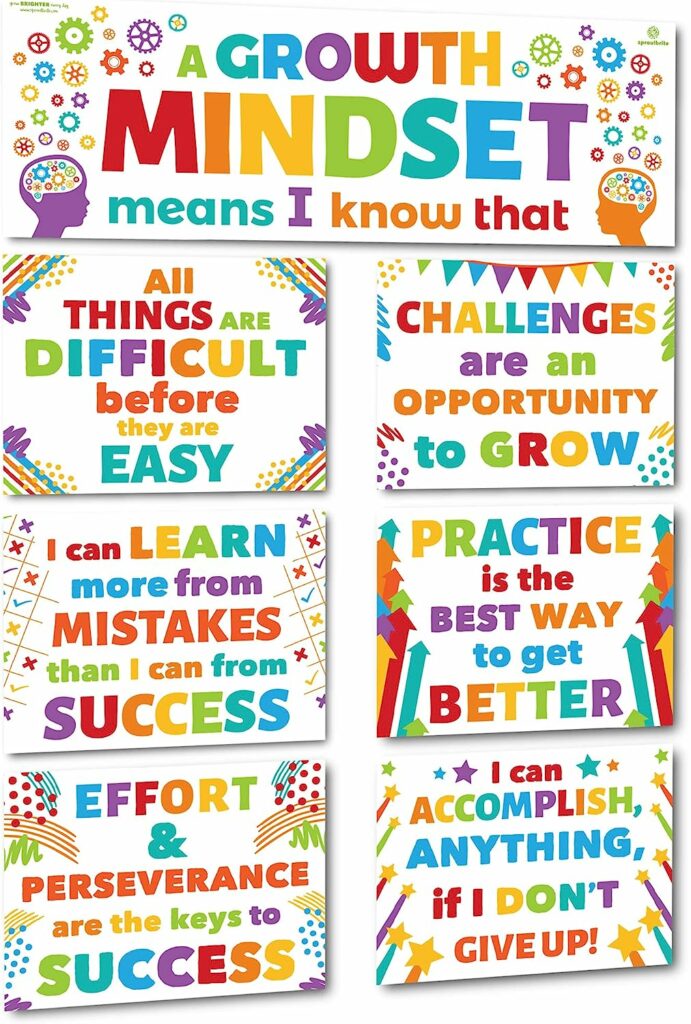
This pack from Sproutbrite includes seven pieces, creating a full display of 40 inches wide by 60 inches high. Printed on poster paper to get the brightest and boldest colors, these banners are designed to inspire kids to change their perspective on mistakes. Aimed at elementary school ages, they’re ideal for classrooms, libraries, and after-school programs.
6. Sweetzer & Orange Growth Mindset Posters
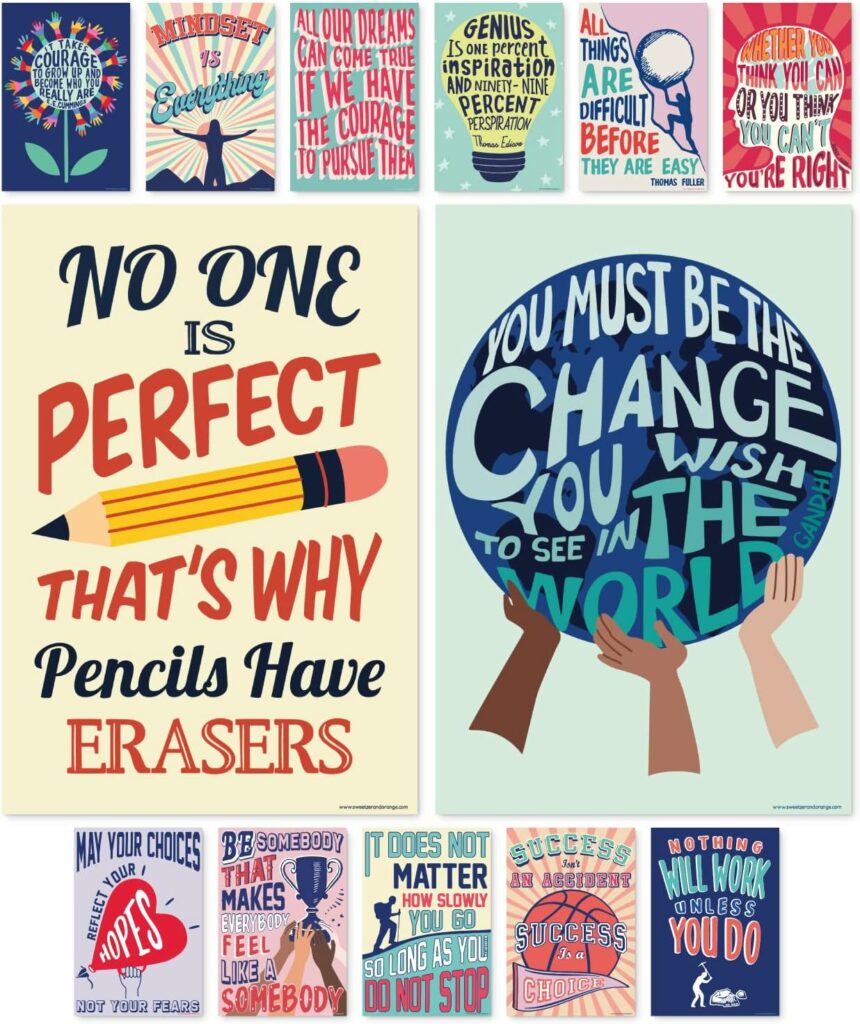
Sweetzer & Orange presents a growth mindset boost with their unique and eye-catching set of 13 posters, each 15×22″ in size. Unlike traditional chalkboard designs, these posters feature bold, easy-to-read words and focused growth mindset slogans. A special “oil gloss” finish enhances the colors without the usual glare found in laminated posters.
With an extra thick 250gsm paper, they won’t tear easily and can be hung or framed perfectly. Designed for various educational settings, from high school to preschool, these posters come with a 12-month guarantee, adding credibility and assurance to their quality.
Final thoughts
The growth mindset posters we’ve explored in this post offer a tangible reinforcement of the values and attitudes that contribute to lifelong learning and success. They remind us, and our students, that challenges are opportunities for growth, and that effort and perseverance are the keys to unlocking potential.
Teachers, educators, and parents looking to instill these essential values should consider these posters as valuable tools in shaping the minds and attitudes of the young learners. As always, the visuals we surround ourselves with can make a lasting impression, and these growth mindset posters are designed to do just that.
References
- Dweck, C. S. (2006). Mindset: The New Psychology of Success. Random House.
- Yeager, D. S., & Dweck, C. S. (2012). Mindsets That Promote Resilience: When Students Believe That Personal Characteristics Can Be Developed. Educational Psychologist, 47(4), 302-314. doi:10.1080/00461520.2012.722805