Update September 2021
I deleted the old post and replaced it with the one below. This post first appeared here.
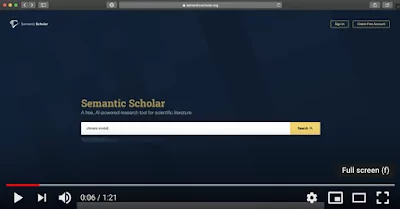
Semantic Scholar is a good academic search engine that allows you to search millions of scholarly articles for academic content relevant to your research topic. Unlike other search engines, Semantic Scholar combines the power of artificial Intelligence, machine learning, language processing with semantic analytic search enabling users to get more accurate search results.

“Semantic Scholar uses machine learning techniques to extract meaning and identify connections from within papers, then surfaces these insights to help scholars gain an in-depth understanding quickly.”
The way Semantic Scholar works is simple. Enter your search query in the site search box and start navigating your search results. You can conduct your search by topic, paper, keyword, or author. You can then filter your search by field of study, date range, PDF availability, publication type, and more. Once you find the paper you are interested in you will be able to read its abstract, check the references it includes, how many citations it has, and with one click generate a citation in various formats. If you have an account with Semantic Scholar you can save content to your library, create search alerts, and many more. Watch the video below to more about Semantic Scholar.